Dark adaptation
Eyes need roughly 20–30 minutes in darkness to reach useful sensitivity. A red flashlight preserves that adaptation while you read a chart.
Night-Sky Observation Notes
LocalJournalHome collects practical notes for observers in Canada who want to understand constellations, planets and seasonal sky changes without specialised gear. The focus is on what is visible to the unaided eye, with binoculars, or with a modest telescope.

What is covered
Eyes need roughly 20–30 minutes in darkness to reach useful sensitivity. A red flashlight preserves that adaptation while you read a chart.
Moon phase, twilight and local light pollution decide how much is visible. New-moon weeks away from city glow reveal the faint band of the Milky Way.
A planisphere or chart oriented to your latitude and date shows which constellations sit above the horizon at a given hour.
The night sky shifts about two hours earlier each month. Orion belongs to winter evenings; Scorpius and Sagittarius mark Canadian summer nights.
Planets do not twinkle the way stars do. Venus, Jupiter, Mars and Saturn are reachable with the unaided eye, and Saturn's rings show in small telescopes.
A pair of 7x50 or 10x50 binoculars resolves the Moon's craters, Jupiter's brightest moons and many open clusters before any telescope is needed.
Notes

Dark adaptation, choosing a viewing spot, and the first objects to recognise on a clear evening.
Read note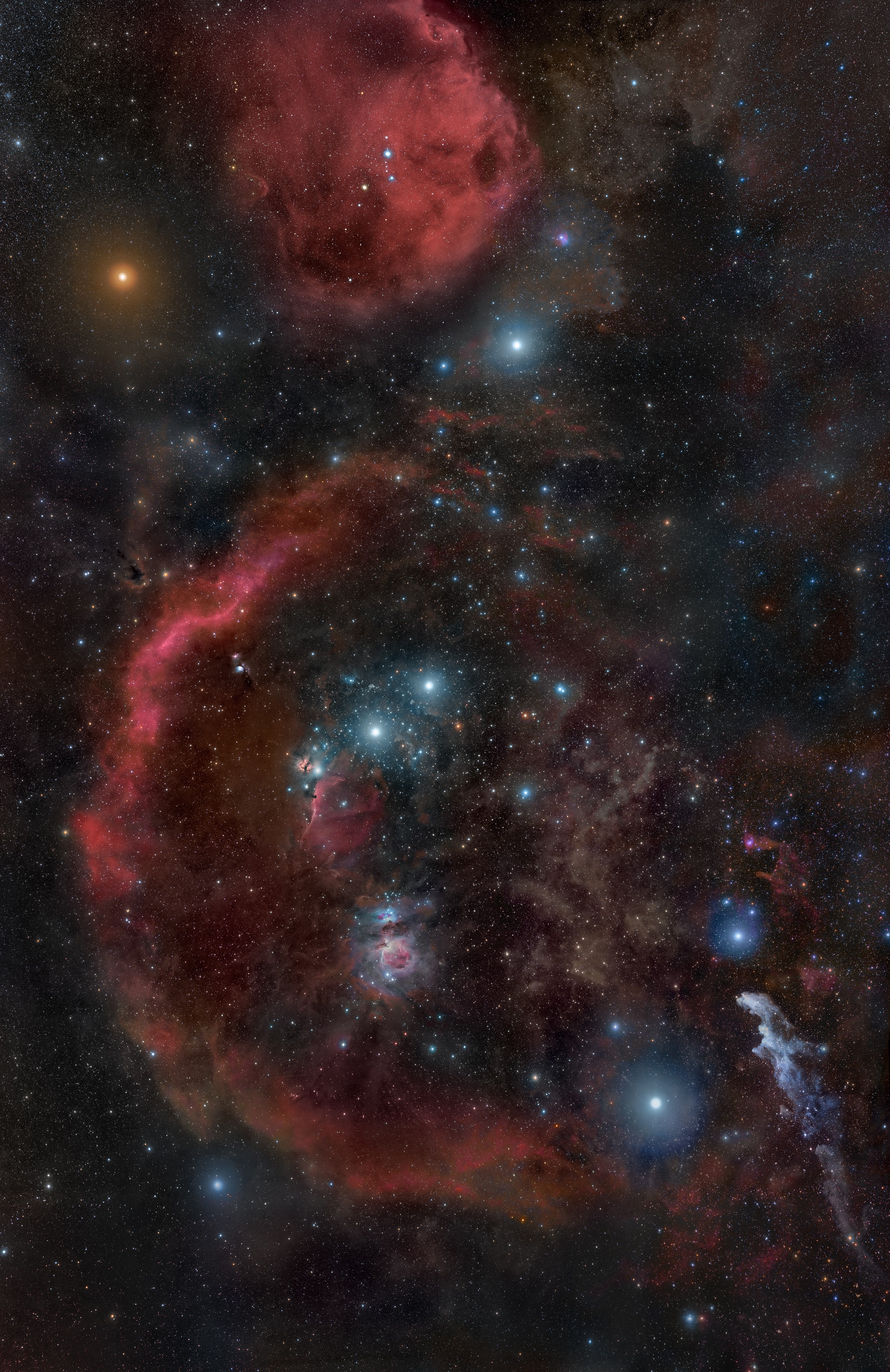
How to orient a planisphere, use bright stars as signposts, and trace Orion through a winter sky.
Read note
Why planets shift against the stars, when each is best placed, and what a small telescope reveals.
Read noteContact
Send a question about anything published here, or point out a correction. Messages are handled by the editorial contact below.
| Editorial contact | webmaster@localjournalhome.org |
|---|---|
| Topic | Amateur astronomy, night-sky observation |
| Region of focus | Canada |
For national events and dark-sky guidance, the Royal Astronomical Society of Canada maintains public resources at rasc.ca.